
By Melton Konchella
A Kenyan innovator has been recognised for developing a digital platform that could transform how coffee beans are graded while supporting environmental sustainability and preserving community knowledge.
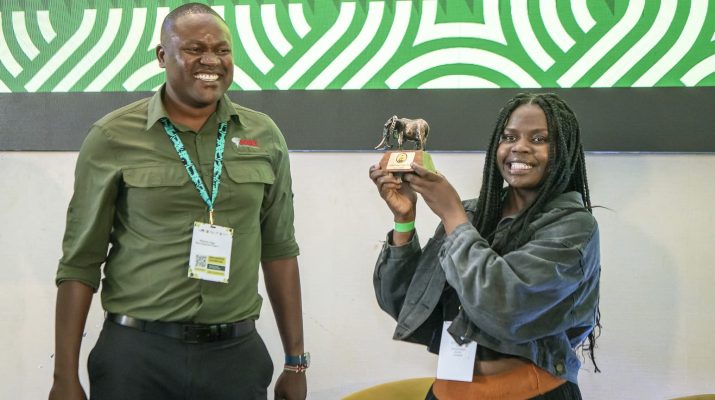
Cynthia Nekesa received recognition for creating a conservation-focused digital platform that integrates technology with traditional knowledge systems to promote sustainable environmental practices.
Her work demonstrates applied innovation and strong leadership in bridging community knowledge with digital tools to produce meaningful conservation outcomes.
Nekesa was selected from a competitive pool of 48 submissions from across Africa and was honoured during the Global Conservation Tech & Drone Forum (GCTDF) 2026 held in Nairobi last week.
During the ceremony, she also received a tailored internship with the Mara Elephant Project (MEP), the organisation sponsoring the award aimed at recognising young leaders applying technology to create practical conservation impact.
The recognition came during a high-profile plenary session that celebrated Nekesa and four other finalists for their ethical and practical approaches to using technology in conservation.
“We received 48 high-quality submissions, and the calibre of the work was a strong testament to the energy, ingenuity, and commitment of young people in bringing conservation technology to life,” said Jonty Slater, co-founder of Global Conservation.
The Youth Conservation Tech Award 2026 targets individuals aged 25 and under who are deploying emerging technologies such as drones, artificial intelligence, geographic information systems (GIS) and sensors in real-world conservation operations.
Organisers of the Tech and Drone Forum said the competition focused on solutions that demonstrate practical conservation outcomes rather than conceptual ideas.
A panel of judges drawn from conservation organisations including the Kenya Wildlife Service, the Smart Earth Ranger Conservation Alliance and Lion Guardians conducted detailed interviews with the five finalists before selecting the winner.
As part of the recognition, Nekesa received the prestigious Elephant Bronze Award donated by Safari Bronzes, a hands-on internship with the Mara Elephant Project focused on drone-based conservation operations, an annual membership to the Society for Conservation Biology, and a coffee barista experience sponsored by Amka Café.
The four other finalists Catherine Naserian Kiseperi, Brian Omwoyo, Andrew Anyona Mogambi, and Bargetuny Job Cheruiyot also received complimentary access to the forum, a one-year membership to the Society for Conservation Biology and a book from the Nature Drones stand.
Additionally, the runners-up will participate in the fully funded Mara Elephant Project Experience, a four-day immersive programme at the organisation’s headquarters where they will gain direct exposure to conservation field operations.
The award highlights the growing role of young innovators in shaping the future of conservation across Africa.
This year’s forum was held under the theme “Technology in Service of Nature: Protecting Wildlife, Supporting People, Restoring Ecosystems,” celebrating innovators who are applying modern technology to real-world environmental challenges.
“Joining GCTDF 2026 is important to us because conservation today depends on sharing knowledge, building skills, and working together,” said Marc Goss, CEO of the Mara Elephant Project.
He added that emerging technologies are most effective when grounded in field experience and accessible to the people shaping the future of conservation across the continent.
“We are proud to support Nekesa and all the finalists through this award and look forward to welcoming her to the MEP team,” he said.
The Youth Conservation Tech Award formed a key part of GCTDF 2026, reinforcing the forum’s commitment to encouraging innovation and creating career opportunities for the next generation of conservation leaders.
The five-day forum held in Nairobi brought together conservation practitioners, researchers, community leaders, technologist and policymakers to discuss practical, field-based solutions for wildlife protection and environmental sustainability.