
By Dorothy Musyoka
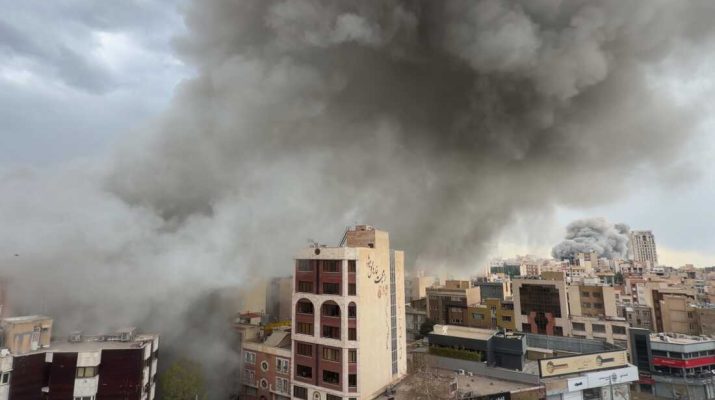
The Permanent Mission of the Islamic Republic of Iran to the United Nations in Geneva has issued a formal diplomatic note condemning what it describes as large-scale unlawful armed attacks carried out against Iran on February 28, 2026.
In the communication addressed to all Permanent Missions and international organizations based in Geneva, Iran characterizes the strikes as a blatant violation of Article 2(4) of the UN Charter, which prohibits the threat or use of force against the territorial integrity and political independence of any state.
The statement asserts that the attacks amount to an act of aggression under international law and represent a serious breach of conduct.
“These acts are blatant violation of Article 2(4) of the Charter of the United Nations, which unequivocally prohibits the threat or use of force against the territorial integrity and National Sovereignty of any state,” read the statement.
According to the note, the attacks resulted in the death of Iran’s Supreme Leader, Ayatollah Sayyid Ali Khamenei, who was killed in what the statement describes as a deliberate strike on his residence in central Tehran.
The Mission states that, beyond his role as Iran’s highest political authority, he held a prominent religious position as a Marja’ al-Taqlid and was a source of guidance to millions across the Islamic world.
The killing, the statement argues, constitutes the targeting of an internationally protected person and qualifies as an unlawful extrajudicial act.
The communication references the Convention on the Prevention and Punishment of Crimes against Internationally Protected Persons and UN General Assembly Resolution 3314 (XXIX) on the Definition of Aggression.
It maintains that such conduct engages the international responsibility of the states involved and triggers obligations to investigate, prosecute and ensure accountability.
The Mission further calls on all states not to recognize or assist in maintaining a situation created by what it terms serious breaches of international law.
The statement also addresses the broader political context, asserting that the attacks occurred while Iran was engaged in negotiations concerning its nuclear program.
It emphasizes that Iran’s nuclear activities are peaceful and that it had entered discussions in good faith with the aim of reaching a mutually beneficial outcome.
The note accuses the United States and Israel of undermining diplomatic processes and using Iran’s nuclear program as a pretext for aggression.
Invoking Article 51 of the UN Charter, the Mission affirms Iran’s inherent right to self-defense.
It declares that any personnel, installations, or bases involved in the alleged aggression regardless of their location may be considered lawful military objectives in the exercise of that right.
“The great nation of Iran, heir to a millennia old civilization, neither can nor shall submit to such malign acts. In this defining moment, the forces of manifest evil confront a people resolute in faith and determination,” the statement read in part.
The statement stresses that Iran has never initiated aggression against another state and frames its actions as defensive and proportionate.
However, the Permanent Mission reiterated Iran’s commitment to diplomacy while warning that red lines must not be crossed.