
By Melton Konchella
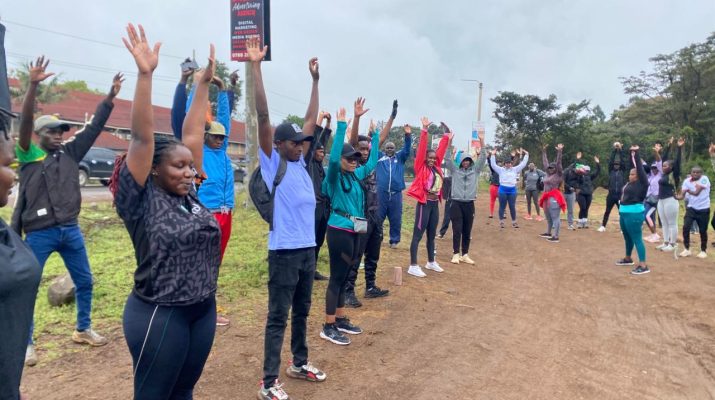
At dawn, before matatus flood the roads and the city fully wakes up, a quiet movement is already unfolding. Small groups gather on the edges of Nairobi, lacing up sneakers, adjusting caps, checking step counters.
Their destinations vary sometimes a casual loop around the city, other times an ambitious long-distance route stretching all the way to Gatundu.
What unites them is purpose. This is not just exercise; it is a growing urban culture.
In a city where gym memberships can feel exclusive, crowded, or financially out of reach, walking has emerged as the most accessible form of fitness.
It requires no subscription, no specialised equipment, and no intimidation. Long-distance community walks are now common, reframing fitness as endurance, consistency, and mental strength rather than aesthetics.
For young professionals, students, and creatives, walking aligns perfectly with Nairobi’s fast-paced but cost-conscious lifestyle.
It offers physical benefits while providing rare mental stillness in a city that rarely slows down.
What truly fuels this trend, however, is the social dimension.
These walks have evolved into moving communities where strangers meet and leave as friends. Conversations unfold naturally with every kilometre, covering careers, relationships, creative projects, and business ideas. In an era dominated by digital networking, walking has reintroduced face-to-face connection.
Phones remain in pockets, and interactions feel unforced. A single long walk can build trust and familiarity that months of online exchanges fail to achieve.
As walkers move beyond neighbourhoods and estates, they are also redefining how the city is experienced.
Roads once perceived only through car windows are reclaimed step by step. Walkers witness the city waking up, exchange greetings with roadside traders, and experience Nairobi at human speed.
Long routes to surrounding towns have become symbolic, challenging the notion that distance is only conquerable by vehicles.
The city begins to feel smaller, more personal, and deeply connected.
For Gen Z and millennials in particular, walking has become part of identity. Sharing step counts, sunrise photos, and route maps is less about performance and more about discipline and self-mastery.
Choosing to walk long distances in a car-centric city is a quiet statement prioritising health over convenience, connection over isolation, and experience over speed.
As Nairobi continues to expand, this booming walking culture signals a broader shift. It highlights the need for safer pedestrian infrastructure and people-centred urban planning.
What began as weekend fitness has evolved into a lifestyle and, increasingly, a movement. In Nairobi today, progress is not only measured by traffic flow or skyline growth, but also by collective footsteps steady, determined, and reshaping the city one walk at a time.